Music Therapy and Virtual Reality
Share this post
Innovative Collaboration: Creative Therapy Adelaide Contributes to Virtual Reality Stroke Therapy Research
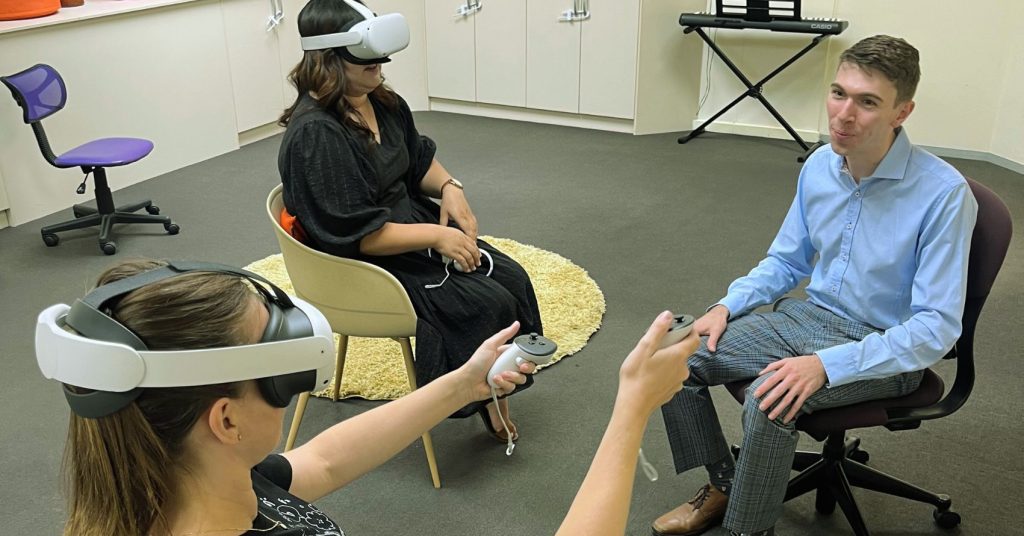
In an exciting development for stroke rehabilitation, Creative Therapy Adelaide has recently been consulted on an innovative virtual reality (VR) program being developed by Flinders University. This collaboration marks a significant step forward in combining music therapy with cutting-edge technology to enhance stroke recovery outcomes.
The Virtual Reality Stroke Therapy Trial
Flinders University researcher Thomas Beltrame is spearheading a study that investigates the use of mirror therapy and music to support stroke survivors in regaining upper limb movement. This research is part of Mr. Beltrame’s PhD work as a biomedical engineer and represents a promising intersection of technology and therapy in stroke rehabilitation.
The research team aims to develop an upper limb rehabilitation program in virtual reality. Their goal is to improve the quality of life for stroke survivors by testing whether the combination of music and virtual reality can enhance recovery outcomes.
Creative Therapy Adelaide’s Contribution
On January 21st, Thomas Beltrame visited Creative Therapy Adelaide to demonstrate the virtual reality program he is developing. Our team of experienced neurologic music therapists, including Rina Yu, Managing Director Natalie Oliveri, and Senior RMT Rowan Harding, were consulted on various aspects of the technology. They provided valuable insights on:
- The potential usefulness of the technology in stroke rehabilitation
- Music quality and type incorporated into the VR environment
- Overall feedback on the new technology to help improve the program for study participants
While Creative Therapy Adelaide’s role was consultative, our team’s expertise in music therapy and its application in neurological rehabilitation provided valuable perspectives to help refine and enhance the VR program.
The Promise of Music Therapy and Virtual Reality
The combination of music therapy and virtual reality in stroke rehabilitation is an emerging field with significant potential. Current research suggests that both modalities offer unique benefits to stroke survivors:
Music Therapy in Stroke Recovery
Numerous studies have demonstrated the positive impact of music therapy on stroke recovery. Research has shown that music therapy can:
- Improve motor function and coordination
- Enhance mood and emotional well-being
- Stimulate cognitive function and neuroplasticity
- Facilitate speech and language recovery
A systematic review published in the Journal of Music Therapy found that music therapy interventions significantly improved upper extremity function in stroke patients.
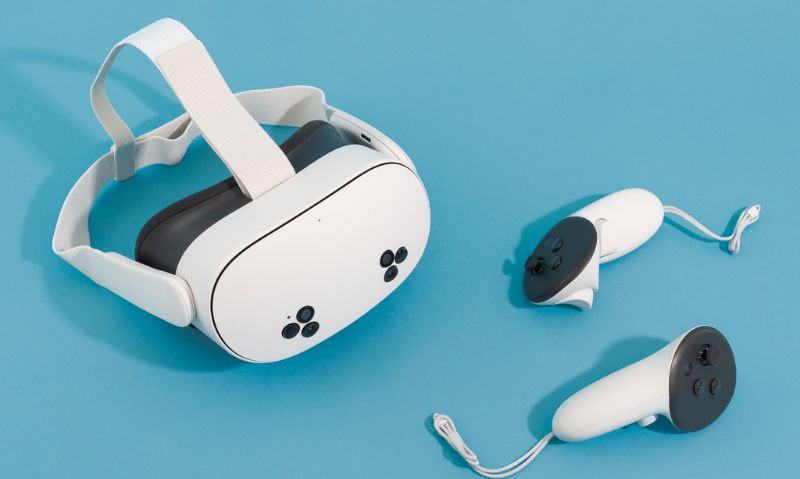
Virtual reality has surfaced as a promising tool in stroke rehabilitation.
Virtual Reality in Rehabilitation
Virtual reality has emerged as a promising tool in stroke rehabilitation, offering several advantages:
- Increased patient engagement and motivation
- Safe and controlled environment for practice
- Real-time feedback and performance tracking
- Customisable difficulty levels to match patient progress
A meta-analysis published in the Journal of NeuroEngineering and Rehabilitation reported that VR-based rehabilitation was more effective than conventional therapy in improving upper limb function in stroke patients.
The Pilot Trial
The pilot trial aims to formally test this new technology and determine if the therapy improves upper limb function, mood, and cognition in stroke survivors. Participants in the study will:
- Wear a watch-like activity monitor for 3 months
- Undertake virtual reality therapy at home for 2 months
- Complete a series of assessments before and after the pilot trial
To be eligible for the study, participants must:
- Have experienced a single stroke as an adult (18+), at least 6 months ago
- Have an upper limb impairment
- Be able to safely use virtual reality
- Be capable of following instructions
- Be able to read and write in English
Participants will be compensated $100 for their time and contribution to this important research.
The Future of Stroke Rehabilitation
By combining the proven benefits of music therapy with the immersive capabilities of virtual reality, this research project has the potential to significantly advance stroke rehabilitation techniques. As we eagerly await the results of this pilot trial, the field of stroke rehabilitation continues to evolve, offering new hope for improved recovery outcomes.
At Creative Therapy Adelaide, we are honored to have been consulted on this innovative project. While our role was advisory, we believe that collaborations between clinical practitioners and researchers are crucial for advancing therapeutic interventions. We look forward to seeing how this research progresses and its potential impact on stroke rehabilitation.
The intersection of music therapy and virtual reality represents an exciting frontier in rehabilitation science. As technology continues to advance, we anticipate seeing more innovative approaches that can enhance the lives of stroke survivors and others with neurological conditions.
For those interested in learning more about this groundbreaking study or potentially participating, please contact:
Mr. Thomas Beltrame
Email: thomas.beltrame@flinders.edu.au
A PDF information sheet is available here:
We at Creative Therapy Adelaide are excited to see the outcomes of this research and how it might shape the future of music therapy and stroke rehabilitation. While we currently offer music therapy and speech therapy services, we remain committed to staying at the forefront of therapeutic advancements. We look forward to the possibility of incorporating evidence-based VR technologies into our practice in the future, always with the goal of providing the best possible care for our clients.
As this field continues to evolve, we encourage stroke survivors, their families, and healthcare professionals to stay informed about these promising developments in rehabilitation technology. The combination of music, virtual reality, and expert therapy holds great promise for enhancing recovery and improving quality of life for those affected by stroke.
References
Amengual, J. L., Rojo, N., Veciana de Las Heras, M., Marco-Pallarés, J., Grau-Sánchez, J., Schneider, S., Vaquero, L., Juncadella, M., Montero, J., Mohammadi, B., Rubio, F., Rueda, N., Duarte, E., Grau, C., Altenmüller, E., Münte, T. F., & Rodríguez-Fornells, A. (2013). Sensorimotor plasticity after music-supported therapy in chronic stroke patients revealed by transcranial magnetic stimulation. PloS One, 8(4), e61883. https://doi.org/10.1371/journal.pone.0061883
Särkämö, T., Tervaniemi, M., Laitinen, S., Forsblom, A., Soinila, S., Mikkonen, M., Autti, T., Silvennoinen, H. M., Erkkilä, J., Laine, M., Peretz, I., & Hietanen, M. (2008). Music listening enhances cognitive recovery and mood after middle cerebral artery stroke. Brain, 131(3), 866-876. https://doi.org/10.1093/brain/awn013
Schneider, S., Schönle, P. W., Altenmüller, E., & Münte, T. F. (2007). Using musical instruments to improve motor skill recovery following a stroke. Journal of Neurology, 254(10), 1339-1346. https://doi.org/10.1007/s00415-006-0523-2
Silveira, T. M. (2022). Music therapy as a superpower in stroke rehabilitation. Australian Music Therapy Association. https://www.austmta.org.au/content/music-therapy-superpower-stroke-rehabilitation
Street, A. J., Fachner, J., & Magee, W. L. (2023). Exploring music-based interventions for executive functioning and emotional well-being in adult stroke survivors: A systematic review. Brain Sciences, 13(4), 41. https://doi.org/10.3390/brainsci13040541
Street, A. J., Magee, W. L., Bateman, A., Parker, M., Odell-Miller, H., & Fachner, J. (2020). Neurologic music therapy in multidisciplinary acute stroke rehabilitation: Could it be feasible and helpful? Topics in Stroke Rehabilitation, 27(7), 541-552. https://doi.org/10.1080/10749357.2020.1729585
Strzemecka, J. (2013). Music therapy in stroke rehabilitation. Journal of Pre-Clinical and Clinical Research, 7(1), 23-26.
Zhang, Y., Cai, J., Zhang, Y., Ren, T., Zhao, M., & Zhao, Q. (2021). The effectiveness of music therapy on hand function in patients with stroke: A systematic review. Evidence-Based Complementary and Alternative Medicine, 2021, 6677693. https://doi.org/10.1155/2021/6677693